Thermal management drives advanced packaging

Phil Alsop, Contributing Editor at Advanced Packaging Magazine, speaks with Evelyn Weng, Product Marketing Manager at ERS Electronic, about thermal challenges in advanced packaging, warpage control, and how strategic global expansion is supporting next-generation semiconductor manufacturing.
As advanced packaging technologies such as fan-out, panel-level packaging, and 3D integration continue to evolve, thermal management and substrate warpage are emerging as critical challenges. ERS electronic, a long-established specialist in thermal solutions, is positioning itself at the centre of this transition with new facilities, expanded capabilities, and advanced process technologies.
In this interview, Evelyn Weng, Product Marketing Manager at ERS, discusses how the company is addressing key industry bottlenecks, supporting customers through global expansion, and enabling the next wave of packaging innovation.
PA: ERS Electronic recently opened a new production, R&D, and competence centre in Barbing, Germany. What strategic role does this facility play in supporting long-term growth and the wider European semiconductor ecosystem?
EW: We acquired this team because of their deep experience in semiconductor manufacturing, particularly in machine building. By bringing R&D, production, hardware, and software together in one place, we create a strong foundation for long-term development of advanced packaging equipment.
This integration allows us to accelerate the delivery of next-generation machines to meet growing demand. As a German-rooted company, it also gives us flexibility. Large customers may require standardised systems, while Europe’s many research institutes often need tailored solutions. This facility enables us to support both effectively.
PA: The new centre brings production, R&D, and customer collaboration under one roof. How does this accelerate innovation and shorten development cycles?
EW: Customers often send us samples for testing and demonstration, while our process engineers work directly with mechanical and electrical design teams.
This removes the traditional sequential workflow where testing, feedback, and redesign happen in stages. Instead, everything happens in parallel, significantly shortening development cycles and allowing us to respond more precisely to customer requirements.
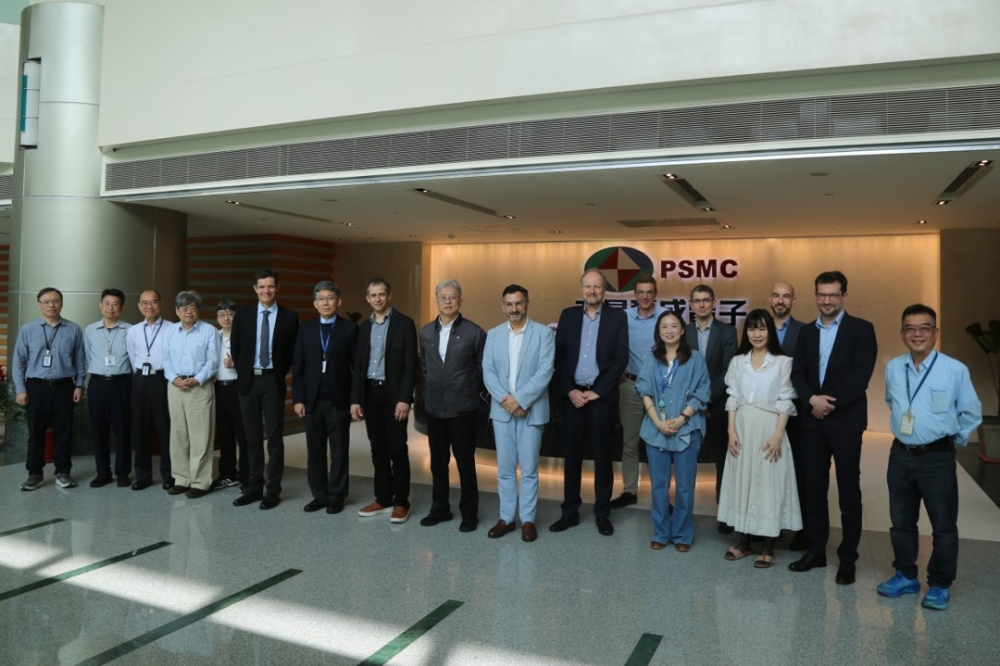
PA: ERS has also opened a demonstration centre in Hsinchu, Taiwan. What motivated this investment, and how important is proximity to customers?
EW: Taiwan is at the centre of advanced packaging innovation, with many leading companies developing the most advanced technologies.
Being close to this ecosystem allows us to stay at the forefront. We can observe challenges in real time, understand customer needs, and feed that knowledge back to our headquarters in Germany. This loop strengthens our development and enables us to deliver optimised solutions globally.
PA: With the rise of chiplets, 2.5D to 3D integration, and high-density fan-out, what are the biggest thermal management challenges today?
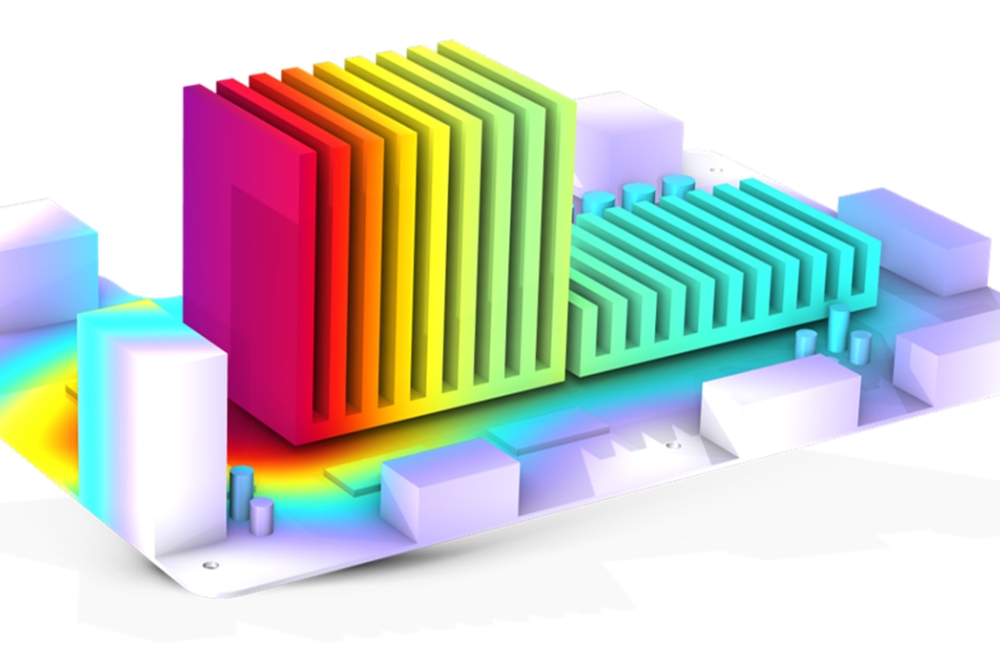
EW: Thermal management is one of the most critical challenges. The key issues are heat dissipation in multi-stack structures and material-driven warpage.
Different materials respond differently to heat, creating significant deformation at the substrate level. ERS has more than 50 years of expertise in thermal technologies, and since 2008 we have focused on warpage control. This experience allows us to support the industry in overcoming these challenges.
PA: Temporary bonding and debonding are becoming critical for handling ultra-thin substrates. How is ERS addressing this with technologies like photothermal debonding and Lumosol systems?
EW: ERS was a pioneer in temporary bonding and debonding and developed the first thermal debonder on the market.
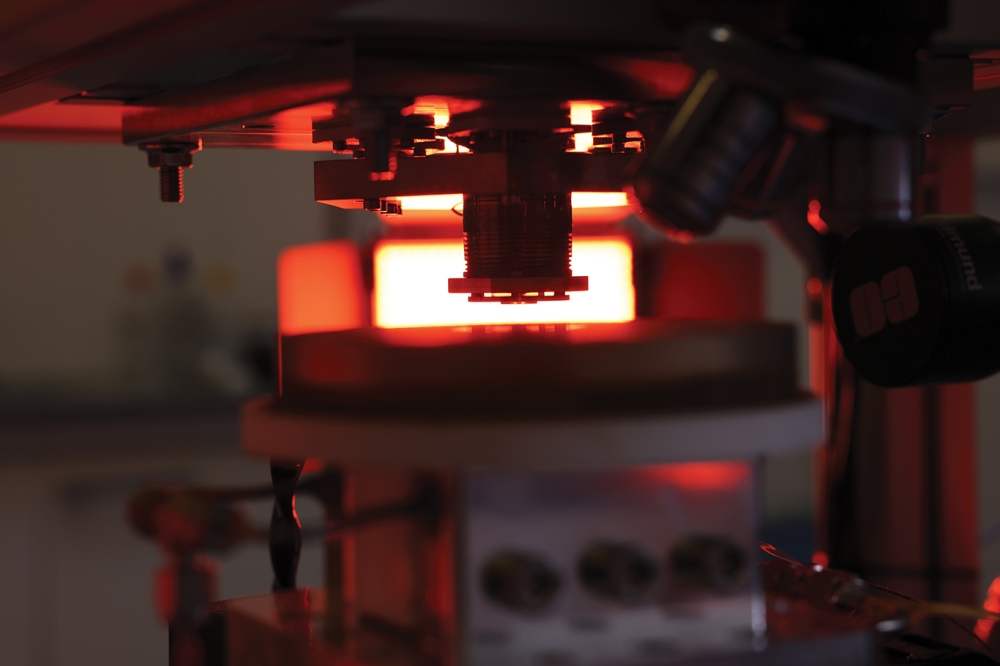
Our current photothermal debonding solution, Lumosol, builds on this foundation. The industry is increasingly shifting toward photonic debonding to avoid thermal stress and reduce yield loss. By combining photothermal technology with our expertise in wafer handling, we can deliver highly reliable solutions for advanced packaging.
PA: ERS has collaborated with Fraunhofer IZM on panel-level packaging. How has this partnership helped advance the technology and its industrial adoption?
EW: We shipped our first panel-level machine to Fraunhofer in 2018, making us an early adopter in this space.
Since then, we have continuously refined our understanding of panel handling. Panel-level packaging differs significantly from wafer-based processes, and there are many subtle challenges. Over the years, we have built strong expertise that allows us to support customers transitioning to panel processes.
PA: Panel-level packaging is seen as key to higher throughput and lower cost. What technical hurdles still need to be overcome?
EW: The biggest challenge is the lack of standardisation. There is no single panel size, with formats ranging from 300 to 600 mm.
This is where ERS has an advantage. As an agile company, we can adapt to different sizes and provide semi-customised solutions. However, warpage becomes more severe as panel size increases, making our expertise in thermal control, chuck design, and vacuum handling critical.
PA: Warpage is a major yield challenge in fan-out and panel-level packaging. How has ERS addressed this through its technologies?
EW: We introduced our first warpage correction system in 2008 for relatively simple structures. Since then, packaging has become much more complex, particularly with stacked architectures.
Over the past two decades, we have continuously evolved our technology. Today, we offer advanced solutions ready for customer demonstrations and have achieved strong results in recent deployments.
PA: Talent shortages are a growing concern across the semiconductor industry. What role can companies like ERS play in developing the next generation of engineers?
EW: Talent is a global challenge, especially as more facilities are being built.
At ERS, we collaborate closely with local universities in Bavaria and offer internships to give students hands-on experience. We also actively engage with students to capture their ideas, as they often bring fresh perspectives that inspire innovation.
In addition, we work with semiconductor organisations focused on workforce development. Building the next generation requires collaboration across industry, academia, and research institutions.