Empowering advanced FCBGA substrate design rules for automotive applications

Autonomous systems are forcing substrate design into new territory. As copper traces shrink, reliability becomes the real battleground for next-generation automotive packaging.
By Jaimal Williamson, Texas Instruments
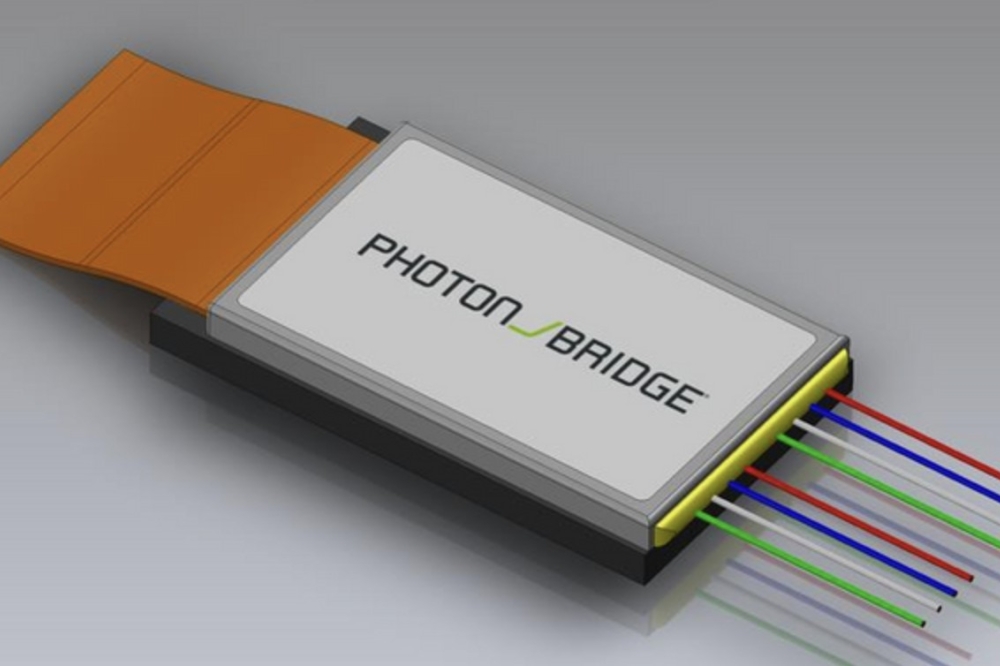
Historically, semiconductor packaging had a moniker as the stepchild of the semiconductor ecosystem, with back-end assembly and packaging processes relegated as an afterthought or modest necessity for innovation, especially when compared to front-end wafer fabrication processes that embodied Moore’s law and high technological investment. Now, back-end packaging has risen like a phoenix and taken its place within the semiconductor pantheon as a quintessential differentiator, along with the Internet of Things and artificial intelligence (AI). High-density interconnect routing enabled through flip-chip ball grid array (FCBGA) substrates (Figure 1) is now commonplace to meet trillions of operations per second (TOPS) in devices.

Figure 1: Example of an FCBGA package
For example, devices with high electrical functionality combine serializer/deserializer and double-data-rate memory technologies, laying the groundwork for high-density interconnects routed in substrates for a myriad of applications. Applications supporting AI, autonomous driving, aerospace and space, data center networking, and high-performance computing (HPC) require TOPS to satisfy demanding operational specifications. Advanced packaging design rules (that is, routed in FCBGA substrates) maximize interconnect density through the distribution of fine copper (Cu) traces and spaces (the distance to adjacent flip-chip bond pads or traces), augmenting electrical performance. Ultimately, implementing advanced FCBGA substrate design rules can significantly impact silicon entitlement, package form factor and cost.
Advanced substrate design rules can push the boundaries of substrate supplier capabilities where latent process defects or shifts can impact package assembly manufacturing and reliability yields. For example, Cu traces yielded at the low end of the width specification can present challenges of low crack resistance during temperature cycling because of a reduced cross-sectional area [1] and local coefficient of thermal expansion mismatches. On the other hand, Cu traces that yield at the high end of the width specification can present obstacles during temperature-humidity-bias testing, since a wider trace is closer to an adjacent trace or pad. This scenario increases the potential for ion migration.
Understanding the impact of advanced substrate design rules during component-level reliability (CLR) and board-level reliability (BLR) becomes even more paramount for automotive applications. With Tier 1 suppliers and original equipment manufacturers driving the enviable requirement of zero defects for automotive applications, a challenge for packaging engineers is to dig deep into the fundamentals of materials science. This entails understanding the chemical structure-to-transient material property relationships of organic material sets to thermomechanical changes in various metallic material properties within the package construction.
Examining the implementation of advanced FCBGA package design rules in literature and across substrate supplier and outsourced semiconductor assembly and test roadmaps, the proliferation of devices featuring finer Cu lines and space for automotive devices is lacking. For example, high-performance FCBGA devices such as 2.5D devices that use high-density routing through organic or silicon interposers for HPC applications are not subjected to the more stringent qualification conditions defined by the Automotive Electronics Council (AEC) Q-100 standard [2]. High-interconnect-density substrate routing is a prerequisite for FCBGA package design in order to power the demand for ultra-functionality on silicon and packages supporting different levels of driving automation.
As higher levels of driving automation increase from Society of Automotive Engineers J3016 standard Levels 2 and 3 (advanced driver assistance systems) to Level 4 and 5 (autonomous driving), the implementation of advanced substrate design rules becomes necessary to accommodate TOPS in devices. Yet there is a gap in exploring advanced substrate designs featuring finer Cu trace lines and space for automotive applications.
For this reason, Texas Instruments conducted a detailed study to extract package-level reliability data empirically. The study focused on FCBGA package reliability to understand the risks associated with finer Cu lines and space from an automotive chip-to-package interaction readiness standpoint. The reduced cross-sectional area of fine Cu lines make it susceptible to cracking under temperature-cycling environments (Figure 2). The Cu lines (or traces) are typically sandwiched between a silica-filled polymeric Ajinomoto build-up film-based dielectric material, where differences in coefficient of thermal expansion drive stress at the internal FCBGA substrate layers in temperature-cycling environments. Performing both board and component temperature cycling enables full quantification of the reliability margins of fine Cu trace routing.

Figure 2: Example of a copper trace crack during temperature cycling
Results and discussion
Performing both component- and board-level stress testing enabled a comprehensive perspective of the reliability of advanced design rules listed in Table 1. Employing an aggressive hammer test for CLR testing initiated an accelerated response based on an understanding of failure modes. This hammer test included a sequential series of aggressive moisture-soak-as-preconditioning substitute, multiple reflows at peak lead-free temperatures, and temperature cycling beyond condition B (–55°C to 125°C). BLR testing was based on Joint Electron Device Engineering Council (JEDEC) JESD22-A104 condition G, soak mode 4 conditions [3]. Recorded BLR failures occurred while in-situ monitoring after the first interruption for a period of a specified nanoseconds and an increase in daisy-chain resistance, followed by multiple additional interruptions within a percentage of the first cycles to failure.

Table 1: Evaluation legs subjected to package reliability testing
Subjecting an equal sample size for legs 1 and 2 to the CLR hammer test conditions correlated to the failure mode produced from extended testing of typical AEC Q-100 temperature cycle condition B, and thus could accelerate the accumulation of test failures. After test failures at three different temperature cycle read points, a Weibull analysis quantified the performance between legs 1 and 2. As indicated in Table 1, the only difference in the substrate design is the Cu trace width and space. With this being the case, the cross-sectional area of the Cu trace played a significant role in the CLR results.
For leg 1, the first cycle to failure was 3.5 times earlier than leg 2. Figure 3 shows the failure probability at a 95% confidence interval at first cycles to failure between legs 1 and 2. The figure also highlights the comparative results with similar failure probability plotted at a 95% confidence interval. The failure mode in both cases was Cu trace cracking at a similar inner layer of the substrate. Figure 4 shows the failure of the Cu trace crack.


Figure 3: Failure probability vs. first cycle to failure for legs 1 (left) and 2 (right)

Figure 4: Failure analysis of Cu trace cracking at the inner substrate layer
With respect to characteristic life (alpha) and shape parameter (beta) values, the statistics of legs 1 and 2 provide a degree of clarity on the implications of the advanced substrate design rule of finer Cu traces as width reduces. Per Figure 5, leg 1 shows a slope (beta is greater than one, but less than four) that is not as steep as leg 2 (see Figure 6), indicating earlier wear out, higher variation and a lower degree of predictability. Leg 2 results represent a steeper slope (where beta is greater than four), indicating a more predictable and consistent life span for this failure mode given its wider Cu trace cross-sectional area. The beta value for leg 2 aligns with fatigue or an aging mechanism.


Figure 5 (left) Characteristic life at 63.2% fails for leg 1 and Figure 6 (right): Characteristic life at 63.2% fails for leg 2
Figure 6 shows the characteristic life plot for leg 2. The tangible differences in slope between legs 1 and 2 are conspicuous, and therefore provide an explanation for the performance differences in characteristic life as observed in Figures 5 and 6.


Figure 7: Comparison of package warpage between legs 1 (left) and 2 (right) at 30°C and 250°C
Measuring warpage at both 30°C and 250°C revealed the contribution of package warpage and Cu density, if any, as a function of the different advanced substrate design rules between legs 1 and 2. These temperatures provide a contrast in warpage at room temperature and peak reflow temperature as associated with a lead-free surface-mount technology (SMT) process. Figure 7 shows that there was not any statistical difference between legs 1 and 2 based on overlap of circles from the JMP plot. When unmounted parts (parts not constrained to the printed circuit board) undergo temperature cycling, the package is free to conform to its natural state. As such, measuring warpage upon heating and cooling at 30°C captured any hysteresis effects and thermomechanical changes of the organic material sets as they surpassed their glass transition temperature. Similar to the results in Figure 7, the measurements in Figure 8 show no statistical difference between legs 1 and 2 upon heating and cooling.


Figure 8: Comparison of package warpage of leg 1 (left) and 2 (right) heated and cooled to 30°C
Evaluating legs 1 and 2 at JEDEC standard JESD22-A104 condition G, soak mode 4 conditions during BLR complements the CLR results previously reported. Similarly, Weibull analysis was the primary metric to quantify reliability performance between the two FCBGA advanced package rule designs as presented in Table 1. As expected, leg 1 failed first due to the reduced cross-sectional area of the Cu trace width. Failure analysis confirmed Cu trace cracking.
Although not reported in this study, multiple nets were monitored in-situ during BLR, with a separate net designed to isolate second-level interconnect reliability at BGA connections. The net reported in this study, as extracted from in-situ BLR monitoring, corresponds to a continuous loop path from the BGA pad through the package and first-level connection and routed back to the BGA pad. This net was also monitored for package integrity including Cu trace reliability.
Leg 1 failed approximately 1.2 times earlier than leg 2 at first cycles to failure. Figure 9 illustrates the characteristic life at 63.2% fails for legs 1 and 2 under BLR testing. Comparing Figure 9a and 9b, leg 2 has approximately 1.53 times higher cycles to failure than leg 1 at 63.2% fails.


Figure 9 : Characteristic life at 63.2% fails for legs 1 (left) and 2 (right) under BLR conditions
Similar to the CLR results, the beta value (greater than four) post-BLR testing for leg 2 aligns with fatigue or an aging mechanism. Leg 1 has a beta value less than four, which is consistent with it having earlier first cycles to failure. Again, the reduced cross-sectional area of the finer Cu trace produced with leg 1 parts is likely the reason for the earlier first cycle to failure.
Substrate suppliers typically have a Cu trace width tolerance of approximately ±2µm, where inherent manufacturing variation plays a role in the characteristic life of the distribution of parts. Nonetheless, both BLR and CLR results show high margin in meeting AEC Q-100 conditions.
Conclusion
This study demonstrated the efficacy of advanced FCBGA design rules compatible with specific Cu trace width and space values and material sets through BLR and CLR conditions. Extracting package-level reliability margins befitting higher levels of driving automation was the focal point of this empirically based study.
The study subjected an equal distribution of FCBGA parts to accelerated CLR based on an understanding of common failure modes generated during standard AEC Q-100 conditions and BLR at JEDEC standard JESD22-A104 condition G, soak mode 4 conditions, tested to device failure. Weibull analysis provided suitable statistics to understand the wear-out mechanism of the Cu trace crack failure mode.
As anticipated, the finer Cu trace parts (leg 1) exhibited the first cycles to failure. The Weibull shape parameter (beta) value of less than four was consistent with the early cycles to failure that occurred during CLR and BLR testing, coupled with a wider variation of parts failing.
Given the reduced cross-sectional area of the Cu trace and its impact on reliability margin, packaging engineers must go the extra mile in understanding substrate supplier process control because of its contribution to chip-to-package (CPI) interaction. Studying the effects of CPI by measuring package warpage across a lead-free SMT profile found no statistical differences.
Developing an automotive mindset to achieve zero defects requires constructive interaction across substrate suppliers, assembly sites and material suppliers, coupled with a strong discipline canvassing literature. For the latter task, there is usually a precedent to set a path for exploration and deeper learning. The crux is empowering advanced substrate design rules as an inevitable feature of flip-chip packaging to facilitate higher levels of driving automation.
Acknowledgment
The author would like to acknowledge Lee McNally for his input on Weibull analysis.
Jaimal Williamson is a Packaging Engineer and Senior Member Technical Staff within Texas Instruments’ Packaging Technology Solutions group, Dallas, TX, USA. His focal areas as a lead technologist include flip-chip platform development of advanced CMOS Si nodes, qualification, and productization to support multiple automotive, industrial, aerospace, and defense applications. He has authored and co-authored 35+ journal articles, conference papers, and technical magazine articles, as well as 35+ U.S. patents in the field of semiconductor packaging. He received a BS in Chemistry from Grambling State University and a MS in Polymers (via School of Materials Science and Engineering) from the Georgia Institute of Technology.