
How PI Enables Advanced Packaging
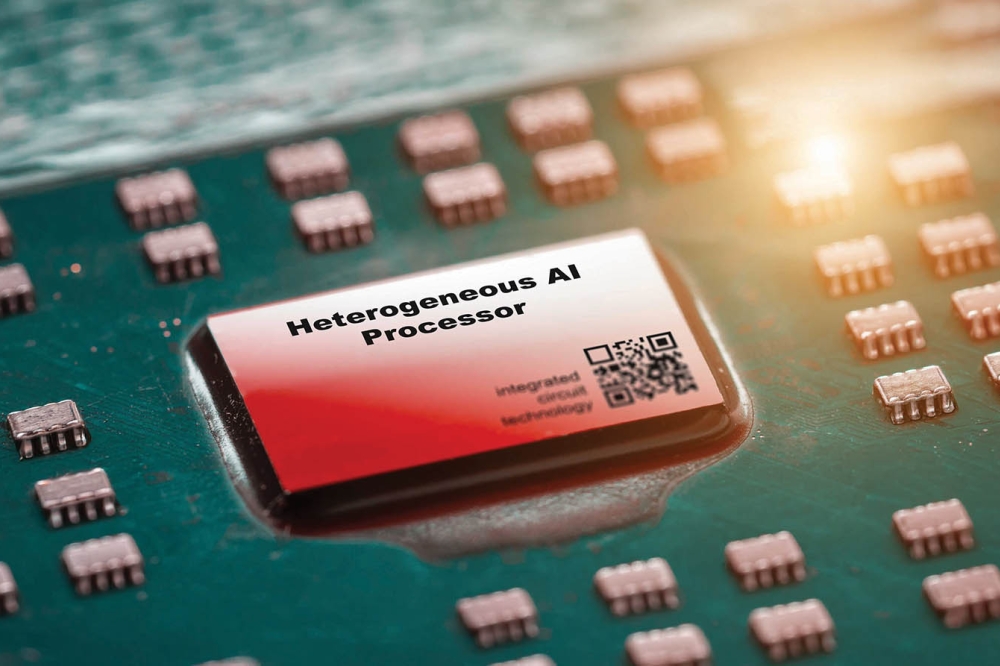
How precision motion, alignment intelligence, and integrated subsystems turn heterogeneous integration into manufacturable reality.
David Forer – Director Market Strategies – Semiconductor, Physik Instrumente
Packaging is now the performance lever
Advanced packaging has moved from a back-end afterthought to a front-line driver of system performance. As computing becomes increasingly modular chiplets, stacked memory, co-packaged optics, and heterogeneous integration, the package is no longer just protection; it is the interconnect fabric and, in many designs, part of the signal path. Industry investment reflects this shift. One recent example is the creation of new advanced packaging and photonics centres aimed at scaling 3D integration and silicon photonics for high bandwidth, energy-efficient systems.[1] That scaling effort exposes a hard truth: the best architectures are only as good as the assembly technology that can build them at yield.
At leading-edge nodes, assembly tolerance budgets collapse. Optical waveguide cores in silicon photonics can be on the order of 0.2 micrometres, so coupling optics to photonic integrated circuits quickly becomes a nanometer class alignment problem rather than a conventional pick-and-place task.[2] Similar precision pressures are showing up across advanced packaging steps: aligning die to interposer interfaces, placing micro bump arrays, controlling coplanarity for bonding, and holding position through adhesive cure or thermal excursions. These demands are fundamentally motion control problems multi-axis, high resolution, repeatable, and fast.
PI (Physik Instrumente) enables this transition by supplying the motion, sensing, and control subsystems that allow equipment makers and device manufacturers to execute advanced packaging workflows with the necessary combination of accuracy and throughput. PI’s contribution is not limited to a catalog of components; it includes integrated multi axis platforms and firmware level alignment intelligence that can run optimization loops directly on the controller. The result is a practical path from ‘it aligns on the bench’ to ‘it aligns in high volume manufacturing’.
Where advanced packaging stresses the factory
Advanced packaging processes tend to concentrate risk into a small set of operations: alignment, bonding, and verification. Each is a high-sensitivity step where misalignment can permanently lock in performance loss or cause outright failure. In photonics packaging, for example, active optical alignment is frequently the gating operation. Because many assemblies include multiple optical channels and multiple optical elements, manufacturers may need to find and then re- optimize alignment several times along the build flow.[4] That repetition drives both cycle time and cost, and it magnifies any shortfall in automation robustness.
From a motion standpoint, the manufacturing challenge has three defining characteristics. First, alignment is inherently multi degree of freedom. Translation and rotation are coupled; optimising X Y often changes the best Z and tilt angles. Many workflows, therefore require sub-micron, and in some cases nanometer, control across as many as six degrees of freedom.[3] Second, the system must be stable while the process acts on the assembly. Adhesive cure, thermal cycling, or mechanical clamping can introduce drift, so the motion system must either hold position with high stiffness or actively compensate. Third, the factory cares about seconds, not minutes. Serial, axis-by-axis tuning scales poorly as channel count increases; what is tolerable for a single fibre becomes impossible for an array.
Packaging equipment also faces tight envelope constraints. Tools must fit inside compact production stations, and in some applications, they must operate in controlled environments (clean, vacuum, or temperature-managed). Assembly systems must maintain alignment under vibration and shock while minimising footprint.[5] Meeting all these requirements simultaneously is difficult with conventional stacked stages and PC driven control loops.
PI’s motion hardware foundation: stiffness, resolution, and dynamics
PI’s portfolio for semiconductor and photonics manufacturing covers precision motion and positioning technologies from nanopositioners to multi-axis robots.[6] For advanced packaging, three hardware themes are particularly relevant: parallel kinematic multi-axis platforms, hybrid coarse/fine positioning, and ultra-smooth long travel stages for wafer and panel level operations.
Parallel kinematics is exemplified by PI’s hexapods: six struts arranged as a Stewart platform provide motion in all six degrees of freedom. Compared with stacking individual linear and rotary stages, a hexapod can deliver a smaller footprint, higher stiffness, and better dynamic behavior.[7][8] High stiffness matters directly in packaging, because the system must hold an aligned position while bonding forces, tooling contact, or curing processes act on the assembly. PI provides hexapods across a range of sizes, including compact and vacuum-compatible variants for controlled environments.[9] Many platforms use direct drive actuation and high-resolution encoders, supporting smooth motion and nanometer-class step size.[10]
At the subsystem level, PI has recently highlighted compact photonics alignment platforms that combine multiple degrees of freedom with substantial travel in a small package. For example, an alignment system with 40 mm travel in a roughly 5 x 7 x 4 inch envelope, using crossed roller bearings and direct drive linear motors for fast, backlash-free motion.[11][10] These design choices map well to advanced packaging realities: a tool must move far enough to acquire alignment, then converge quickly without overshoot.
Hybrid motion architectures bridge the gap between coarse travel and ultra-fine control. PI’s piezo-driven flexure nanopositioners provide sub-nanometer resolution and rapid response and are commonly paired with a longer range motorised platform.[12][8] In practice, the motor stage performs acquisition and gross alignment, while the piezo stage executes high-speed scans, dithers, and drift compensation near the optimum. This approach is especially valuable for active optical alignment, where the peak coupling region can be extremely narrow.[2]
Wafer and panel scale workflows often require long travel motion with exceptional straightness and repeatability. PI’s semiconductor motion solutions include air bearing stages that provide frictionless motion and nanometer straightness for inspection or lithography like scanning operations.[17] Such platforms can move a 300 mm wafer rapidly and then stop with sub-micron precision at points of interest.[18] Where bonding demands planarity or levelling, tip/tilt and levelling stages can be integrated to maintain the required surface orientation.[9]
Alignment intelligence: moving faster by moving smarter
Mechanical precision alone does not deliver production throughput. PI explicitly treats software and control algorithms as core enablers of photonics and semiconductor assembly automation.[19] Accordingly, PI implements alignment routines and optimisation logic directly in high-performance motion controllers, so the system can search and converge without relying on slow, external loops.

H-811.F2 Miniature Hexapod | Ideal for Fiber Alignment
A centrepiece is PI’s Fast Multichannel Photonics Alignment (FMPA) capability, implemented as firmware-level commands that execute complex alignment sequences across multiple axes and channels.[20] In traditional serial alignment, a tool optimises one channel or one degree of freedom at a time, then repeats because axis interactions shift the optimum.[21] PI’s approach is to treat alignment as a coupled, multi-variable problem and to optimise multiple channels simultaneously to find a global maximum.[22] In PI’s reporting, multi-channel alignment systems can reduce alignment time by about 99% compared to legacy approaches often described as a 100x speed up that turns minutes into seconds.[20][23] For factories, this is the difference between a viable per-unit cost and an expensive bottleneck.[24][25]

F-713.MAx Compact, High-Speed XYZ Photonics Alignment System
Controller resident scan execution is another practical accelerator. To acquire initial coupling, often called ‘find first light’ the controller can run continuous spiral or sinusoidal area scans without stop start overhead, avoiding delays caused by host communication and mechanical settling.[26][27] Once a signal is detected, the controller transitions into gradient-based searches that dither position and use signal change to drive convergence to the optimum.[28][29] Because these routines can operate concurrently on different degrees of freedom, the system can converge faster than sequential tuning and can better handle coupled sensitivities.[30] Importantly for packaging, such closed-loop strategies can continue during adhesive cure or thermal effects, maintaining alignment as the assembly evolves.[31]
PI further shortens the loop by integrating metrology inputs directly into the motion platform. Many alignment systems accept high resolution analog feedback from photodetectors or power meters, enabling the controller to treat optical signal as the figure of merit.[32] In PI’s F 712 alignment system, for example, the optical power can be read directly and used in the optimization routine, removing the need for slower external measurement workflows.[33] Firmware level functions can map coupling landscapes and compute the optimum using embedded evaluation logic.[34] PI has also described EtherCAT based controller architectures that support rapid signal analysis and even onboard machine learning to accelerate detection of the best alignment point.[35]
Taken together, these capabilities turn alignment from a manual craft into a deterministic, automated process: the system searches, optimises, locks, and if necessary, continuously corrects. This is why PI describes its approach as combining speed, nanoscale performance, and industrial robustness to improve manufacturing economics.[36]
From components to production subsyswtems: what ‘enablement’ looks like
PI’s value in advanced packaging is most visible when its motion hardware and alignment intelligence are delivered as integrated subsystems. Equipment builders often prefer a validated motion and control module they can integrate, rather than assembling a solution from individual parts. PI addresses this through modular photonics alignment platforms, controllers, and application-level software that together constitute a turnkey motion subsystem.[6][8]
A widely cited example is the F 712 and F 713 family of photonic alignment engines. These systems combine a 6 axis motorised platform with nested piezo nano scanners and ship with the necessary control electronics and alignment firmware.[8][37] In the dual-sided configuration (F 712.HA2), two opposing alignment units can align input and output optical interfaces simultaneously, effectively handling multi-channel coupling in six degrees of freedom.[37] PI positions this approach as the benchmark for high-throughput silicon photonics packaging, enabling device-level alignment in about one second by leveraging embedded scan and parallel optimisation routines.[23][37] PI has also communicated manufacturing readiness by noting increased production capacity and reduced lead times for these systems, reflecting deployment scale and maturity.[41][6]
Not every packaging task needs a full 6 DOF capability. For applications where angular alignment is less critical, PI offers compact high-speed XYZ alignment systems such as the F 713.MA series.[40] These modules target use cases like fibre to laser or fibre to photodiode alignment, where rapid translational optimisation dominates the cycle time. The key is that the same controller-level alignment primitives can be reused across different mechanical platforms, simplifying tool development and reducing validation effort.
PI’s motion control ecosystem also benefits from its multi-axis control heritage and the addition of ACS Motion Control, which PI acquired to strengthen controller capabilities for demanding automation tasks.[41] For tool makers, this matters because advanced packaging equipment is increasingly mechatronic: multi-axis motion, synchronisation, metrology integration, and factory communications must work together as a system. Subsystem solutions reduce integration risk and shorten time to market.
Application impact across advanced packaging and photonics
PI technologies appear across advanced packaging workflows wherever precision placement and alignment determine yield. In silicon photonics, high-throughput wafer testing and die-level assembly depend on the ability to align multiple optical channels quickly and repeatably.[43][44] PI’s automation content emphasises that active optics alignment can compress test and packaging cycles substantially, enabling practical scaling of silicon photonics manufacturing.[2][3] The same toolchain supports assembly steps like coupling fibre arrays to PICs, aligning lenses or micro optics, and maintaining alignment through fixation.[3]
In semiconductor packaging, PI’s motion platforms contribute to a broad set of equipment classes, including mask aligners, wafer dicing systems, lithography and inspection stages, and bonding-related tools.[47] During die attach or flip chip operations, for example, the requirement is not only placement accuracy but also repeatability and stable holding during bonding. Where needed, a coarse platform can bring parts into proximity while a fine nanopositioner performs final alignment and correction. At the wafer scale, air bearing stages support scanning and metrology steps that feed forward into bonding and assembly decisions.[17][18]
Beyond semiconductors, PI’s active alignment expertise is used in packaging high-density optical and sensor modules. PI notes that active alignment methods are used in applications such as camera module assembly and LiDAR related optics, where quality metrics can be optimised in real time during positioning.[4] These adjacent markets reinforce a broader point: when performance depends on precise alignment of multiple elements, the manufacturing solution tends to converge on multi-axis motion plus a robust optimisation loop.
Conclusion: enabling manufacturability at the nanometer scale
Advanced packaging is, at its core, a manufacturability problem under extreme tolerance budgets. Chiplet architectures, co-packaged optics, and dense interconnect schemes create value only when assembly can be done quickly, repeatably, and at yield. PI enables this by providing a toolkit that spans high stiffness multi-axis mechanics, nanopositioning for last micron adjustments, long travel scanning stages for wafer level operations, and controller resident alignment intelligence that converts complex multi-variable alignment into an automated process.
The practical outcome is measurable in cycle time and scalability. PI reports alignment time reductions on the order of 99% for multi-channel photonics alignment compared to traditional methods, bringing per device alignment into a production friendly time budget.[20][23] Equally important, integrated subsystems such as the F 712 and F 713 families help equipment builders reduce integration risk by delivering validated hardware and firmware as a unit.[8][37] As advanced packaging continues to evolve, motion and alignment subsystems will remain essential infrastructure, and PI’s integrated approach positions it as a key enabler for the next generation of heterogeneous systems.